Smiling Donkey Head Redwork
The Smiling Donkey Head Redwork is a charming and versatile machine embroidery design that captures the whimsical spirit of wild animals while maintaining a rustic, handmade appeal. Its bold yet playful nature makes it an excellent choice for craft fair products, handmade items, and Etsy listings. Whether used on tote bags, aprons, or embroidered patches, this design has the potential to stand out in a competitive market.
First Impressions: Whimsy Meets Rustic Charm
The Smiling Donkey Head Redwork exudes a friendly, approachable vibe that feels both cute and nostalgic. The design’s simplicity and clear visual focus make it immediately recognizable, even from a distance. The redwork style—characterized by dense stitching and a limited color palette—gives it a farmhouse aesthetic that resonates with customers looking for authentic, handcrafted items.
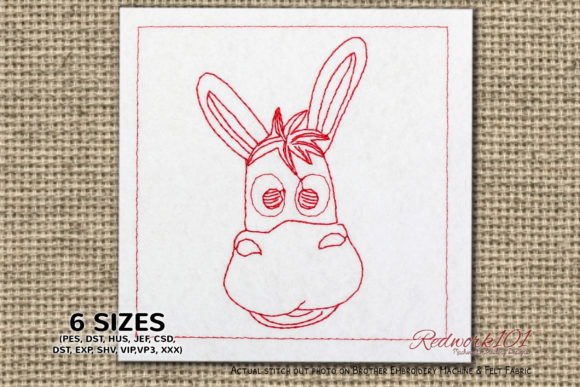
While the Box Stitch shown in the picture is optional, its presence adds a subtle layer of detail that can enhance the overall look without overwhelming the design. The outer box color can be adjusted to match the fabric or design theme, offering flexibility for different product applications.
Best Applications for Smiling Donkey Head Redwork
This design shines on a variety of craft fair products. On a tote bag design, it becomes a focal point that draws attention and invites conversation. On an apron embroidery, it adds a touch of personality that complements the functional aspect of the item. Tea towel embroidery featuring the Smiling Donkey Head Redwork can serve as a unique kitchen accessory that customers will want to display or gift.
Embroidered patches are another ideal application. The design’s clarity and simplicity make it well-suited for small-scale production, allowing for quick and efficient batch work. Fabric pouches and pillow covers also benefit from the design’s boldness, offering a range of sizes and formats that cater to different customer preferences.
For commercial embroidery, the Smiling Donkey Head Redwork can be used in printable mockups, Etsy listings, and as part of a broader collection of handmade products. Its adaptability ensures that it fits into multiple niches, from rustic home decor to casual wear.
Practical Selling and Production Considerations
One of the key advantages of the Smiling Donkey Head Redwork is its ease of recognition at a glance. The design’s straightforward composition makes it suitable for both small accents and large focal points. This versatility allows for creative placement across various product types, ensuring consistent brand visibility.
When photographing the design for online listings, the contrast between thread colors and fabric texture plays a crucial role. A high-contrast setup—such as dark fabric with light thread—can make the design pop in digital images, increasing the likelihood of clicks and purchases. The design also works well in printable mockups, helping sellers visualize how it would appear on different products before committing to production.
From a production standpoint, the Smiling Donkey Head Redwork is repeatable and manageable for batch work. However, careful attention should be paid to stitch density and stabilizer use, especially when working with textured towels or thick fabrics. The design may lose clarity at smaller sizes, so it’s important to test it on various scales before finalizing product dimensions.
Careful-Use Notes for Embroidery Designers
While the Smiling Donkey Head Redwork is generally user-friendly, certain elements require attention. Dense stitch areas may cause puckering on lightweight fabrics, so using the right stabilizer is essential. Tiny details, such as the donkey’s eyes or facial features, should be checked for clarity, especially when using small lettering or intricate patterns.
Curved cap surfaces and dark fabric backgrounds can also affect the design’s appearance, requiring adjustments in thread colors and hoop size. For best results, test the embroidery file on scrap fabric before producing finished products. This step helps identify any issues related to spacing, stitch density, or fabric compatibility.
Impact on Visual Appeal and Customer Engagement
The Smiling Donkey Head Redwork enhances the visual appeal of any product it’s applied to. Its friendly expression and rustic charm create a sense of warmth and authenticity that resonates with customers. This emotional connection can increase product value and encourage repeat purchases, especially for small shop products and boutique makers.
On a craft fair booth, the design stands out as a unique and eye-catching element. When displayed on tote bags, aprons, or pillow covers, it draws attention and sparks curiosity. Customers often gravitate toward designs that tell a story or evoke a feeling, and the Smiling Donkey Head Redwork does just that.
For Etsy sellers and digital sellers, the design offers a strong foundation for creating a cohesive brand identity. Consistent use of the design across different product lines reinforces brand recognition and builds trust with customers. It also provides a solid base for creating design assets that can be sold as digital embroidery files or used in commercial embroidery projects.
Essential Embroidery Designer Notes
Before finalizing production, always test the Smiling Donkey Head Redwork on different fabrics to ensure optimal results. Check thread colors for contrast and visibility, and review the design’s spacing to avoid overcrowding or distortion. Confirm the appropriate hoop size for your machine, and inspect the stitch density to prevent puckering or uneven stitching.
Using the right stabilizer is crucial, especially when working with delicate or textured fabrics. Creating at least one real mockup helps visualize how the design will appear on the final product. Compare fabric colors to ensure the design looks its best in different lighting conditions.
Finally, confirm commercial licensing before selling finished products. While the Smiling Donkey Head Redwork may be suitable for personal use, understanding the terms of use is essential for protecting your business and ensuring compliance with design rights.